Why is marketing reporting usually so bad?
Because most reports are designed to make the agency look good, not to give the client actionable information. A PDF with impressions, clicks, and CTR doesn't tell you whether your marketing is working. It tells you that ads were served.
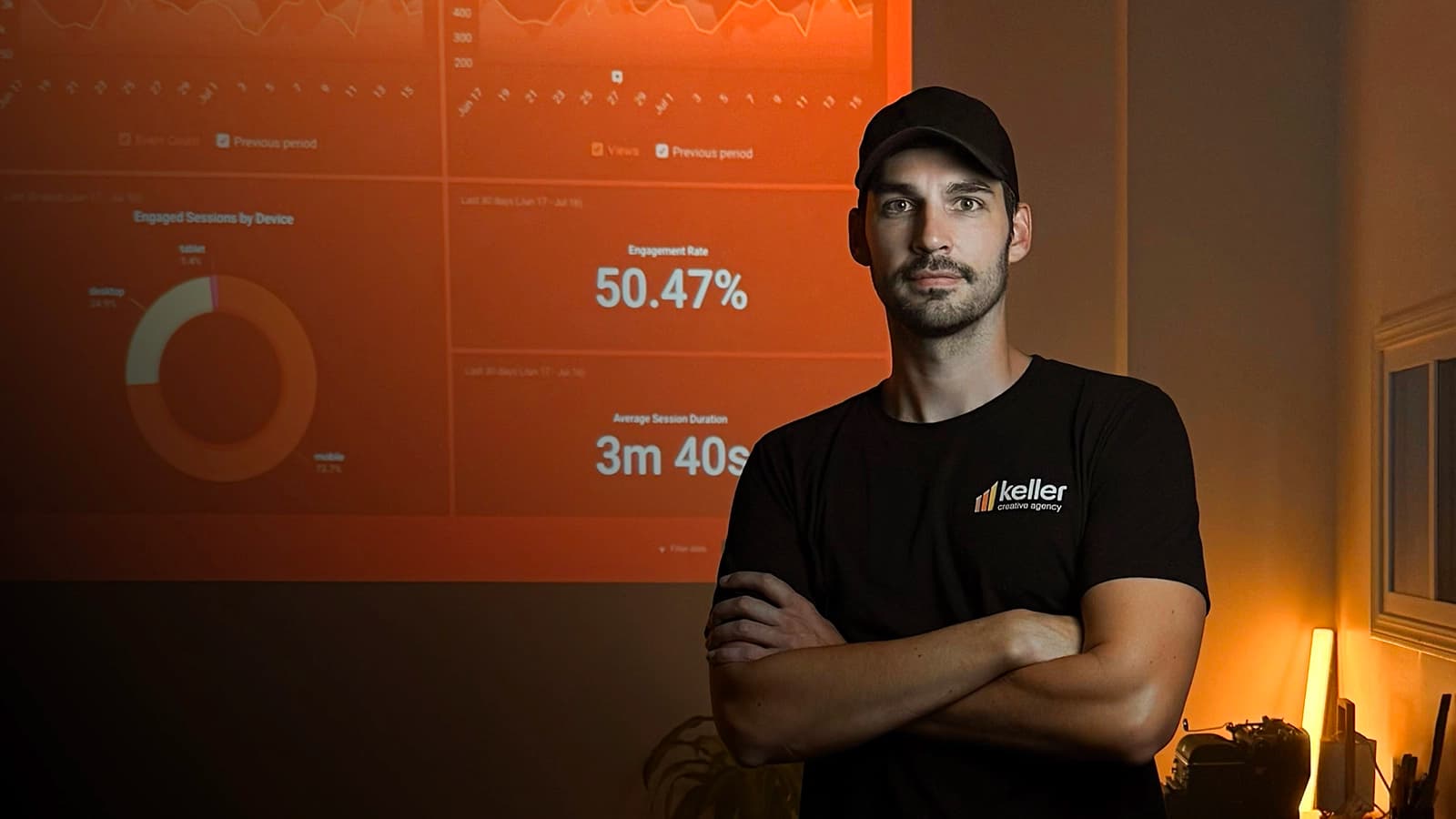
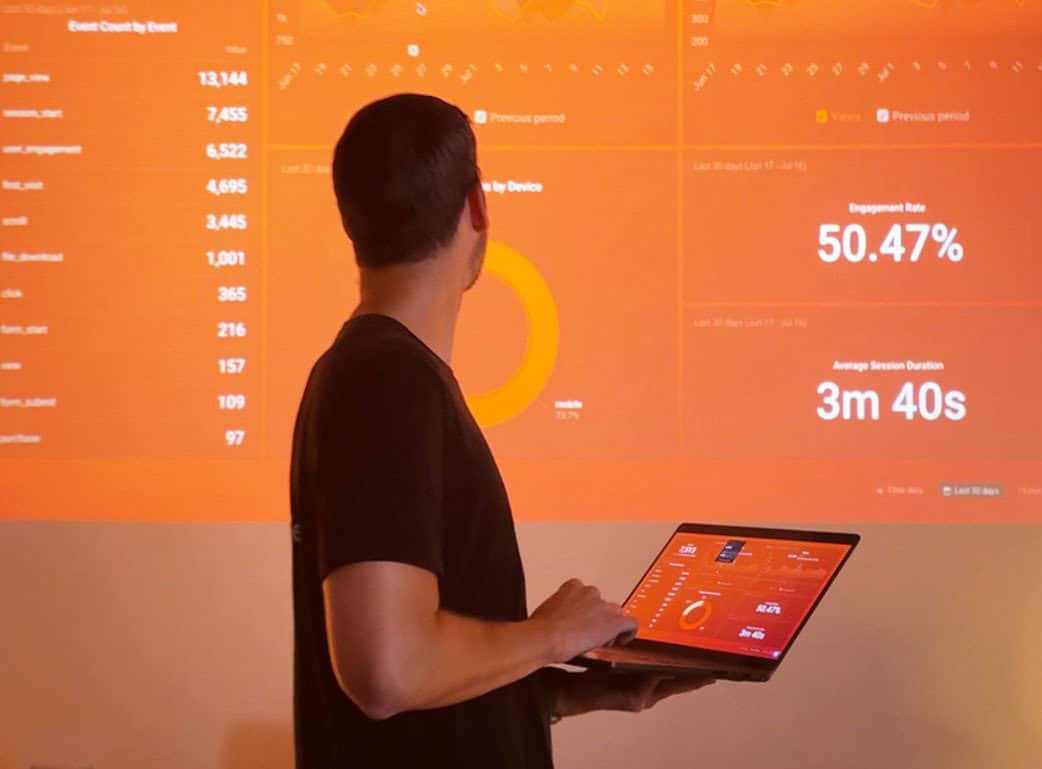
At Keller Creative, every client gets a live dashboard that connects ad spend to actual business outcomes. No cherry-picked metrics, no waiting for a monthly report, no black boxes.
What should a marketing report actually show?
A useful marketing report answers three questions:
- How much did we spend? Total investment by channel and campaign.
- What did we get? Conversions that matter: leads, sales, appointments, store visits.
- What should we change? Specific recommendations based on what the data shows.
For a client like Smart Auto, the dashboard shows spend, conversions, and cost per lead broken out by location (Johnson City, Knoxville, SmartWay, Bright Motors) and by campaign type (branded, general, specific-need). At a glance, the team can see that SmartWay's general campaign delivers leads at $11 each while Knoxville's bad credit campaign runs $19, and understand why both numbers make sense in context.
How do you prevent agencies from hiding behind vanity metrics?
Ask for three things in every report:
- Cost per conversion, not cost per click. Anyone can drive cheap clicks. The question is what those clicks turned into.
- GA4 confirmation. Ad platforms grade their own homework. GA4 provides an independent view of what actually happened on your website. When the numbers match within a reasonable margin, you know the data is trustworthy.
- Trended data: month-over-month and year-over-year comparisons. A single month's numbers mean nothing without context.
CleanFreak's dashboard, for example, shows Google Ads reported 4,300+ conversions with $2.7M in conversion value, and GA4 confirms 5,991 total conversions across all traffic sources. The numbers align, which means the attribution model is sound.
What tools do you use for reporting?
We pull data from Google Ads, Meta Ads, GA4, Facebook Organic, Instagram, Google Business Profile, and other platforms into a unified reporting layer. Each client's dashboard is customized to show the metrics that matter for their business, not a generic template.
The data connections are automated, so dashboards update in real time. Clients don't wait for a monthly email. They can check performance any time.
What does a reporting red flag look like?
Watch for these:
- Reports that only show top-line numbers without campaign-level breakdowns
- No conversion tracking: if the report shows clicks and impressions but no conversions, they're not measuring what matters
- No GA4 cross-reference: if the agency only reports from the ad platform, they're grading their own homework
- "We're building brand awareness" as an excuse for poor performance. Awareness campaigns can be measured too, with reach, frequency, and branded search lift
Related Services